
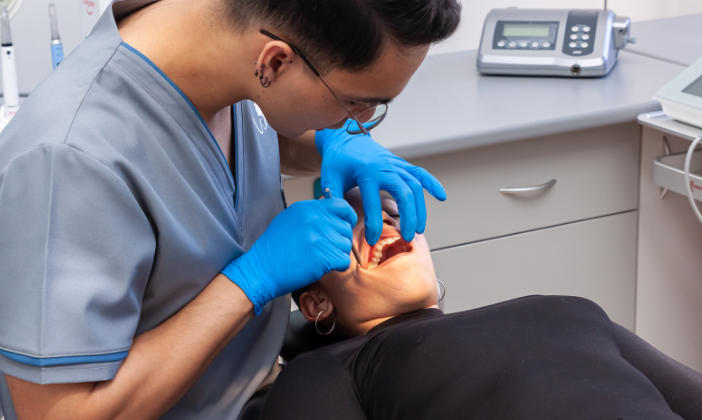
Small problems, such as a chipped or aching tooth, can disrupt your day and your confidence. Restoring function and comfort starts with the right plan and the right restorative treatments. If you are seeking a dentist in Cape Town, we will help guide you on the next steps and how to make informed decisions.
What is restorative dentistry?
Restorative dentistry focuses on repairing or replacing teeth so you can chew comfortably and smile without hesitation. It covers simple fillings through to comprehensive bite rehabilitation.
At TSB Dental and Facial Aesthetics, your options include tooth-coloured fillings (composite restorations), inlays and onlays, dental crowns, dental bridges, implant-supported restorations, full and partial dentures, full mouth rehabilitation, and bite adjustments and occlusal splints.
Which problems do restorative treatments address?
You may benefit from restorative care if you have one or more of the following:
- A cracked or heavily filled tooth that feels weak
- Sensitivity when biting or drinking something cold
- A missing tooth that affects chewing or speech
- Old metal fillings you would like to replace
- Teeth worn down by grinding or acid erosion
- Headaches or jaw discomfort linked to your bite
What happens at my appointment?
Your visit follows a thorough process:
- Assessment and imaging to confirm the condition of each tooth and the supporting gums
- Discussion of priorities such as pain relief, function, and appearance
- Options and timelines for each tooth or area, with pros and limitations explained
- Written plan with stages so you can schedule treatment sensibly
You will leave with a plan you understand, including immediate steps and maintenance advice.
Which restorative options might be recommended?
Different situations call for different solutions. Here is how the main options are used:
- Tooth-coloured fillings (composite restorations): Suitable for small to medium cavities or chips. Composite bonds to the tooth and can be shaped to blend with the surrounding enamel.
- Inlays and onlays: Used when a filling would be too large. These custom pieces strengthen the tooth while conserving as much healthy structure as possible.
- Dental crowns: A crown covers and protects a weakened tooth following fracture, extensive decay, or root canal therapy. It restores shape, strength, and contact with neighbouring teeth.
- Dental bridges: A bridge replaces a missing tooth by anchoring to the teeth beside the space. It restores chewing efficiency and helps keep neighbouring teeth from drifting.
- Implant-supported restorations: An implant acts as a tooth root. It can support a single crown, a bridge spanning several teeth, or stabilise dentures. Suitability depends on bone, gum health, and your general health.
- Full and partial dentures: Removable options that replace several or all teeth. Modern designs can be slim and well-fitting. They are also a helpful step in complex treatment plans.
- Bite adjustments and occlusal splits: Targeted reshaping of biting contacts and custom night splints can reduce the strain from clenching or grinding, helping protect teeth and restorations.
- Full mouth rehabilitation: When many teeth are worn or missing, a staged plan can rebuild function and appearance. This often combines several of the treatments above.
How do I choose between dental crowns, dental bridges and dentures?
Think in terms of support, maintenance, and timeline:
- If a single tooth is cracked or heavily restored, a dental crown often provides the coverage needed.
- If a tooth is missing and the neighbours are strong, a dental bridge can close the space without removable parts.
- If multiple teeth are missing or you want a cost-effective solution while planning implants, dentures can restore function and appearance.
Your plan can also phase treatments. For example, a partial denture now, with the option to place implants later.
What will the process feel like?
Most procedures are carried out under local anaesthetic, so you should feel pressure and vibration rather than pain. You may notice temporary tenderness afterwards. Tell the team what you feel at any stage. Comfort adjustments can be made, and breaks are always available. After most restorative treatments, you can return to normal activities the same day, avoiding very hard or sticky foods until advised.
How long will your restorations last?
Lifespan depends on daily care, diet, bite forces, and regular maintenance. The goal is to keep the tooth and its supporting gum healthy so the restoration can do its job for as long as possible. Review intervals and at-home habits matter as much as the materials used.
How does wider care at TSB Dental and Facial Aesthetics support my result?
Restorative care works best on healthy foundations. As a dentist in Cape Town, we provide the periodontal support that many cases require, including management of gingivitis and periodontitis, deep cleaning (scaling and root planing), and localised antibacterial therapy when appropriate. If soft tissue shaping is needed for a better margin or contour, gum procedures can be planned around your restorative timeline.
When should I book an appointment?
Sooner is better if you have pain when biting, a cracked cusp, food trapped between teeth, or a crown that feels loose. Early attention usually means simpler treatment and fewer surprises. If you are planning cosmetic changes, addressing foundations first keeps future work stable.
Take the next step by booking a consultation for a restorative treatment.